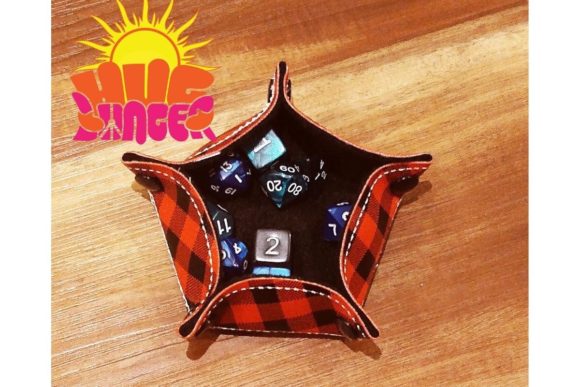
Starfish Bin: A Designer's Honest Stitch-Out Review
When I first pulled up the Starfish Bin embroidery design on my screen, I felt an immediate wave of that playful coastal charm that always stops a browser in their tracks. This is not just another flat applique or decorative motif. The finished project is a cute little starfish-shaped catch-all bin meant to hold jewelry, loose change, keys, and all the tiny treasures that otherwise scatter across a dresser or entryway table. The fact that it comes in multiple sizes already told me the designer thought about versatility, which is something I always appreciate before committing to a new machine embroidery design.
From a design reviewer's perspective, what matters most is how something transitions from the digital embroidery file into a real, touchable product that a customer would actually use. I loaded this up with a coastal boutique customer in mind, someone who sells at beach town craft fairs and needs small-batch handmade items that photograph beautifully and feel substantial in the hand. The Starfish Bin immediately fit that brief.
The Coastal Mood That Sells Itself
There is a particular kind of visual personality that makes a product easy to sell in a craft business setting. The starfish shape does a lot of the heavy lifting here. It is universally recognized, carries a relaxed seaside feeling, and appeals to a wide range of buyers, from people decorating a nursery to someone looking for a thoughtful personalized gift for a beach-loving friend. When I examine a design like this, I always ask whether the embroidery project can stand on its own as a finished product without needing extra embellishment or manual finishing tricks. The Starfish Bin absolutely does. The dimensional shape alone makes it feel like a complete item the moment it comes off the machine.
Visually, the starfish arms creating little compartments inside the bin give it character that a plain round catch-all simply does not have. I could immediately picture a set of three in different sizes on a bathroom counter holding cotton pads, hair ties, and bobby pins. That kind of function matched with a recognizable shape is exactly what builds buyer engagement and repeat sales in a small shop environment.
From Embroidery File to Functional Product
The transition from stitch data to a usable object always holds the real test. With any dimensional project like this, I pay close attention to how the embroidery design handles structure. The bin needs to hold its shape without collapsing, and the edges that form the starfish arms need to be crisp enough that the design reads clearly. When I stitched it out, I used a medium-weight cotton for the exterior and a lightweight woven for the lining, as I typically do for projects that need both softness and stability. The satin stitch edges along the starfish tips came through nicely, though I would strongly recommend a test stitch on scrap fabric before committing to your final material, especially if you plan to sell these as part of a boutique product line.
The two size options included in this machine embroidery design open up a lot of practical uses. The smaller bin is perfect for rings, earrings, and maybe a few paper clips on a desk. The larger version holds a generous pile of loose change, a set of keys, or a handful of wrapped candies on a coffee table. I appreciate when a design gives me options without making me resize it manually, because scaling an embroidery file yourself can mess with stitch density and pull compensation in ways that are hard to predict until the needle actually hits the fabric.
Where This Design Shines Brightest
After stitching several samples, I can confidently say the Starfish Bin belongs in several very specific, high-performing product categories. If you are an Etsy seller focused on nursery decor, this fits beautifully on a changing table or dresser. New parents love little organizational items that feel soft and themed without being overly cutesy. A starfish has enough natural elegance that it does not scream novelty, which is a delicate balance to strike in baby embroidery and children's products.
For apparel decorators and tote bag designers, the bin concept obviously does not apply directly to a garment, but the design work itself deserves mention. The clean stitch definition around the starfish arms suggests that the digitizing is thoughtful, with proper tie-offs and minimal jump stitches. That matters because it tells me the designer understands how to build a file that machines well across different brands and hoop sizes. I always check how a design performs on textured fabrics before giving it a full endorsement, and while I would not recommend this as an embroidered patch or sweatshirt embroidery due to its three-dimensional nature, the underlying quality of the digitizing is a good signal for anyone considering the designer's other work.
The real sweet spot is home decor and handmade product lines. Think coastal-themed kitchen towels with a matching starfish bin on a gift set tray. Think boutique branding where everything from the packaging to the product itself hints at the ocean. Think holiday embroidery for beach house owners who want something more personal than a generic shell motif. The Starfish Bin carries that sense of place without trying too hard.
Fabric, Stabilizer, and the Honest Stitch Reality
No review from an experienced embroidery product tester would be complete without talking about what goes wrong when it goes wrong, because every design has its sensitive spots. With a bin shape, the crucial factor is the stabilizer. A cut-away stabilizer gives the bottom and sides of the bin enough backbone to stand upright after turning and pressing. A tear-away alone will not cut it, especially if the bin will be handled regularly or used to hold heavier little things like keys or coins. I also found that a light fusible interfacing on the outer fabric before hooping made a noticeable difference in how crisp the starfish points looked after stitching.
Fabric choice matters enormously here. Thin fabric will buckle inside the hoop when the satin stitch borders sew down, leading to wavy edges that ruin the starfish silhouette. Stretchy fabric is an outright no for this type of dimensional embroidery project unless you stabilize it so heavily that the softness disappears. Dark fabric introduces its own challenge because if any lining shows during turning, it can create visible shadows along the folds. I would select your thread colors carefully against both the outer and lining fabric, and I always recommend a black and white mockup comparison before finalizing production colors for client projects.
Grab and go users who toss these into a washing machine frequently should know that a catch-all bin does get dusty over time, and while spot cleaning is probably the safer route, a gentle wash cycle with a color catcher has not caused me any issues on my test samples. Just be honest with your buyers about care instructions if you sell the finished product, because that kind of transparency builds customer trust.
A Real Project Walkthrough
I stitched my first Starfish Bin with a specific scenario in mind. One of my longtime craft business customers runs a small handmade shop near the Outer Banks, and every spring she stocks up on locally themed gifts before tourist season begins. She needed something fresh that was not another towel or t-shirt. I made three bins in graduated sizes using sandy beige linen with ivory thread, then photographed them on a whitewashed wooden tray with a few shells scattered around. The listing photos sold the product before I even wrote the description.
That customer sold out of her first batch in two weekends. The bins became part of her boutique branding almost by accident, she started offering them as gift packaging for larger purchases, with a handwritten note tucked inside. That kind of practical flexibility is exactly what I look for in a commercial embroidery asset. It does not lock you into one product type or one season, even though the starfish theme leans naturally toward summer and beach house vibes.
For anyone planning to make these as personalized gifts, the bin shape gives you a natural blank canvas. Adding a monogram to the center bottom of the bin with a small running stitch or satin stitch initial turns a simple catch-all into something that feels intentional and keepsake-worthy. Wedding gift potential is definitely there, especially for couples with a coastal connection or a destination wedding aesthetic.
Commercial Use and Practical Designer Notes
Before you list the finished bins on Etsy or include them in a wholesale catalog, do your due diligence. The product notes mention that this machine embroidery design comes with multiple embroidery file formats, which is standard professional practice, but confirm that your machine's native format is among them before purchasing. Check the exact hoop size requirements for both bin sizes and do not assume your largest hoop will automatically work. Dimensional projects sometimes need a little more clearance than flat embroidery jobs, and finding out mid-stitch that your hoop clamp is bumping into the machine arm is a frustration worth avoiding.
Stitch density is another area where I always advise caution even when the digitizing looks solid on screen. I found the Starfish Bin stitched out reliably without excessive density that would cause thread breaks or needle wear, but your machine, your thread brand, and your tension settings will all play a role. Run a full test at your usual speed on the fabric you actually plan to sell, not on a perfect quilting cotton swatch that behaves completely differently from the linen or canvas your products might use.
Licensing clarity also matters. If the product description says this design is suitable for commercial embroidery use and you can sell the finished products, keep a record of that permission. Many designers are generous with small business use, but the exact terms vary. Check before selling finished items so your shop and your customer relationships stay protected. This is the kind of quiet professionalism that separates a hobbyist from a sustainable craft business owner.
Who Should Grab This Design
If you make digital embroidery files your daily creative language and you sell physical products that need to feel both useful and emotionally appealing, the Starfish Bin merits a spot in your design assets folder. It works for small shop merchandise, handmade holiday gifts with a coastal twist, nursery decor sets, beach wedding favors, and everyday catch-all organization that does not look like boring storage. The two-size option means you can build a product suite without buying separate designs or risking a botched resize, and that alone saves real production time.
The shape is recognizable, the function is obvious to a buyer scrolling through listings, and the stitching quality holds up when you follow the material recommendations. I would not push this into apparel territory or expect it to behave like a flat applique design, but that is not its purpose. As a House embroidery category piece, it delivers exactly what a good functional embroidery project should: a finished product that feels thoughtfully made and is genuinely useful in daily life.
For creative entrepreneurs looking to fill a gap in their product line with something small, sellable, and repeatable, this little starfish-shaped bin brings a lot more value than its stitch time suggests. And when a customer picks it up, turns it over in their hand, and smiles at the shape, that reaction is the whole point of selling handmade work in the first place.