Free Bird Embroidery Design Review for Branded Merch
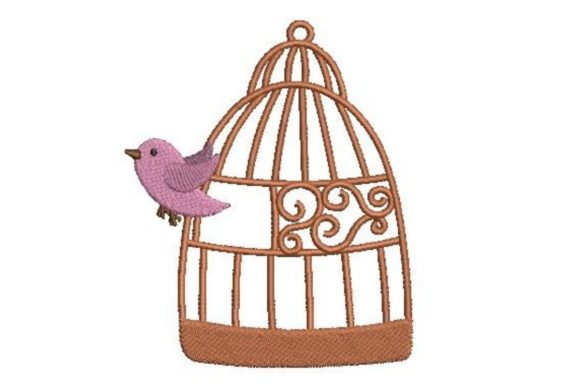
When a small business owner asks me to evaluate a machine embroidery design for commercial use, I start with one question: does this design communicate something worth stitching into a finished product that someone will wear, carry, or display every day? The Free Bird design answers that question before the first thread even touches fabric. It shows a bird that has left its cage — an image built around freedom, movement, and a love for birds that translates into a positive, emotionally open visual. For brands that want to create a connection beyond a logo, this design brings a compelling narrative to the embroidery frame.
Before you load this onto a production machine for small business merch, patch runs, or uniform decoration, let me walk through how I would evaluate Free Bird as a working embroidery designer. I test files the same way whether I am stitching for a boutique bakery, a florist, a pet brand, a creative studio, or a handmade shop selling on Etsy. The visual personality matters as much as the stitch structure, and everything depends on where the design will live on a finished product.
First Impression and Visual Personality
Free Bird feels immediately open and optimistic. The composition — a bird outside its cage — reads as hopeful rather than rebellious, gentle rather than aggressive. That emotional tone matters in brand identity. A café choosing this for apron embroidery wants customers to feel welcome, not challenged. A pet brand adding it to a tote bag design wants the message of care and freedom to align with how they treat animals. The design strikes a balance between decorative and meaningful, which is exactly what you want when the embroidery becomes part of your customer experience.
From a designer perspective, I would categorize the visual personality as approachable, slightly rustic, and warm. It does not feel corporate or stuffy. It does not feel overly whimsical or childish. That middle ground makes it surprisingly versatile — it can sit on a craft business asset just as naturally as on a staff uniform for a local bakery. When I imagine it stitched on a canvas tote or a linen apron, I see a finished product that feels handmade in the best sense: intentional, personal, and worth keeping.
How Free Bird Works in Real Business Use
Most of my clients do not think in terms of embroidery categories. They think in terms of products their customers touch every day. Here is how I would apply Free Bird across the merchandise formats that matter most to small brands.
Embroidered Patches for Branded Merchandise
An embroidered patch version of Free Bird makes sense for brands that sell patches separately or attach them as value-adds to larger products. A handmade soap brand might include a small Free Bird patch tied to gift packaging. A florist could offer a denim jacket patch as a customer loyalty gift. The open cage imagery works especially well for businesses centered on growth, change, or new beginnings — therapists, coaches, wellness brands, even independent bookstores. The design reads clearly even when the viewer has only a second, which is essential for patch visibility on bags and jackets.
Staff Uniforms and Apron Embroidery
For cafés, bakeries, and boutique shops, apron embroidery is often the most visible branded surface in the entire space. A server wearing an apron with Free Bird on the chest or upper bib area creates a soft, approachable impression. I would recommend placement on the left chest or as a centered upper-back accent. The design avoids feeling like a corporate uniform badge and instead reads as a thoughtful detail — and that difference directly affects how customers perceive the business. A small, clean stitch-out of Free Bird on a natural linen or cotton apron tells a customer this place cares about the little things.
Cap Embroidery and Sleeve Details
Cap embroidery places specific demands on any machine embroidery design. Curved surfaces, structured panels, and center seams can distort an image that was not digitized with caps in mind. Free Bird, if digitized at an appropriate scale, could work very well on the side panel of a five-panel cap or as a small front accent offset to one side. For work shirts, a sleeve detail version of Free Bird — scaled down but keeping the cage and bird silhouette readable — offers a distinctive alternative to a standard chest logo. I always recommend testing on actual cap fabric with proper backing before committing to a full production run.
Tote Bags, Product Packaging Accents, and Event Merch
A tote bag design featuring Free Bird does double duty: it carries a brand message and gives the customer something they want to use again. For craft fairs, pop-up markets, and Etsy seller booths, a limited run of Free Bird totes creates an emotional anchor for shoppers. The design works large enough to fill a tote panel or small enough to become a corner accent on product packaging wraps. Event merchandise with this design feels less promotional and more like a genuine gift, which is a rare quality in branded goods.
Where to Use Free Bird With Extra Caution
Every design has boundaries. As an embroidery designer, I flag potential trouble spots before they become expensive mistakes. With Free Bird, several factors deserve careful attention before you commit to production.
- Small patch sizes: If the cage bars or bird details become too fine at reduced scale, the design may lose readability. Test at 50 percent of your target size before ordering a full batch of patches.
- Cap fronts with heavy curvature: The left-chest or side-panel placement usually works better than dead center on a structured cap crown, where the seam line can disrupt the composition.
- Tiny lettering, if included: Some variations of freedom-themed designs include small text elements. Confirm the digitized text height stays above 6mm for reliable legibility on textured fabrics.
- High stitch density areas: The open space inside and around the cage needs balanced stitch distribution. Excessively dense fill in one section can cause puckering on lightweight fabrics.
- Dark uniforms: On black or navy garments, the cage and bird outline may need lighter thread colors to maintain contrast. Always test the thread colors on the actual garment fabric.
- Frequent washing: For uniforms that go through industrial laundry cycles, verify that the stitch structure and stabilizer choice can handle repeated stress without thread breaks.
Brand Identity, Customer Trust, and Recognition
An embroidery design is never just decoration. It becomes part of how a customer remembers a business. Free Bird carries a message of freedom and care, which can strengthen brand identity for businesses that want to project warmth, openness, and authenticity. A customer who receives a package with a Free Bird patch tucked inside, or sees it stitched onto a team member's apron, associates that feeling with the brand itself. That emotional layer is what separates generic merchandise from memorable custom apparel.
Recognition builds through consistency. If you use Free Bird across multiple touchpoints — a patch on the shopping bag, a small stitch on the sleeve of a work shirt, a larger version on the wall of your booth at a market — customers start to connect the imagery with your business without needing a wordmark. For handmade brands and Etsy sellers, that visual consistency raises perceived product value and supports higher pricing because the packaging and presentation feel complete.
Professional Embroidery Designer Notes
Before I ever hand a finished stitch-out to a client, I follow a checklist that catches issues early. Here is exactly what I would do with Free Bird before approving it for business production.
- Test in black and white first: Stitch a single-color version on scrap fabric to evaluate shape readability without color distraction. If the silhouette holds up, the design has strong bones.
- Check small patch size performance: Run the design at the smallest size you plan to use. Look for thread breaks, loss of detail in the cage structure, and whether the bird remains distinct.
- Review thread color contrast: Select thread colors that pop against your brand's fabric choices. Muted tones on natural linen read differently than bright threads on canvas totes.
- Inspect spacing and pull compensation: Look for gaps between the bird and cage elements. Well-digitized spacing prevents the shapes from bleeding together after washing.
- Confirm hoop size compatibility: Measure the design's stitch field against the hoop size you have available. Multi-position hoops may be needed for larger placements on tote bags.
- Test on real fabric: Stitch directly onto the exact apron, cap, or tote material you will use in production. Different fabric textures, weaves, and coatings change how the thread lays down.
- Use proper stabilizer: Match the stabilizer type and weight to the fabric. Cutaway for knits and caps, tearaway for woven aprons and structured totes.
- Create a mockup for client approval: A printable mockup or photographed stitch-out on the target product eliminates misunderstandings before a paid production run begins.
- Compare beside other design assets: Place Free Bird next to your existing logo, tagline, or other design assets to confirm visual cohesion across the brand.
- Confirm commercial licensing: Before any business use, verify that the digital embroidery file license allows commercial embroidery on products for sale. Do not assume — check the terms.
What to Confirm Before Production
Because the product description notes that Free Bird comes with multiple options but does not specify exact file formats, stitch counts, hoop dimensions, or licensing details, I strongly recommend confirming those points with the digitizer or marketplace before purchasing. Ask specifically about available embroidery file formats, whether the design includes multiple sizes, and what the commercial use terms cover. A design that looks beautiful on screen only delivers business value when the technical details align with your production setup.
Also confirm the stitch density and whether the digitizer optimized it for the fabric types you use most. A design digitized for stable woven fabric may need adjustments for stretchy knit caps or soft, loosely woven tote material. These details affect the finished product quality far more than the preview image ever shows.
Final Thoughts From the Embroidery Frame
Free Bird earns its place in a small business merchandise lineup because it does more than fill space. It tells a small story in thread. For the right brand — one built around freedom, care, nature, growth, or genuine warmth — this design becomes a quiet signature. Whether you stitch it onto a patch, a cap, an apron, or a tote, the image of a bird leaving its cage resonates with customers in a way that purely decorative designs rarely achieve. Test it properly, place it thoughtfully, and let it become part of how your business is remembered.